Report on the 1st Mycology Nordics 2024 meeting
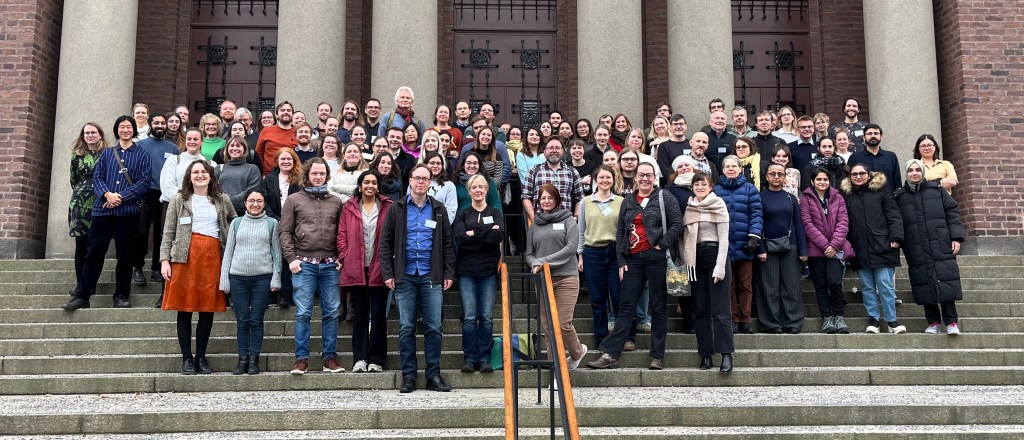
The first Mycology Nordics meeting took place in Stockholm, Sweden, during November 28-29, 2024.
The main organizer of the Mycology Nordics 2024 meeting was Hanna Johannesson, from The Royal Swedish Academy of Sciences/Stockholm University, and co-organizers were Ioana Onut Brännström from Uppsala University and Magnus Karlsson from the Swedish University of Agricultural Sciences. We were given technical support from staff of the Royal Swedish Academy of Sciences, while 16 additional colleagues, primarily from our research groups, assisted in organizing different parts of the conference and made them run smoothly (see list of organizers here).
The meeting generated a big interest. At the time of the registration deadline, 117 people had signed up. We were able to accept 100 of these to join the conference (see lists of final attendees here). We were happy to welcome fungal researchers from different institutions of higher education in Sweden, Norway, Denmark, Finland and Estonia.
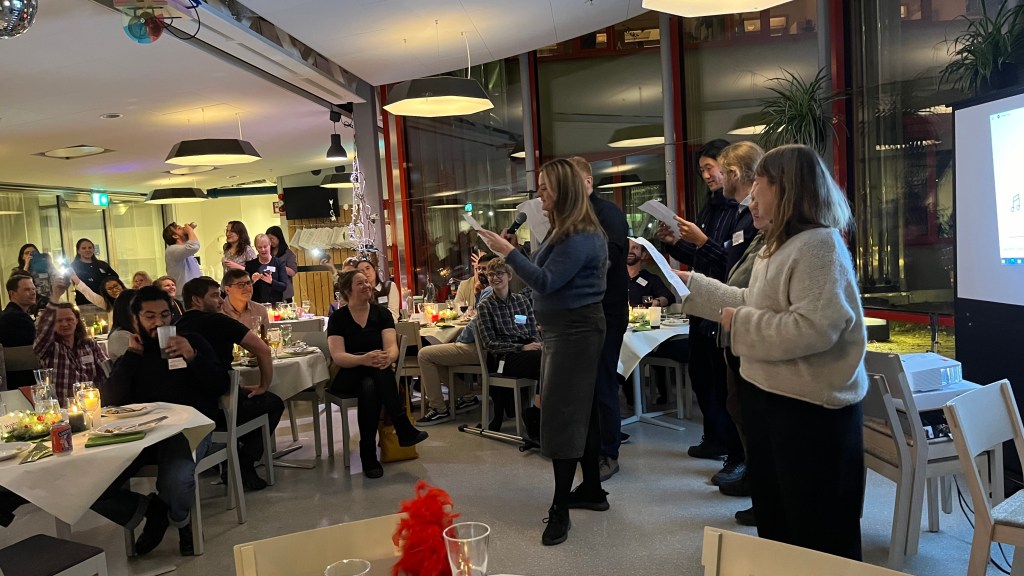
The meeting consisted of talks and an interactive poster session (see the programme here). We were serving joint lunches, coffee breaks and an evening dinner with a party. The talks were organized into four sessions: I) Fungi in the Environment, II) Population and Comparative Genomics, III) Fungal Interactions, and IV) Fungal Diversity and Evolution (see the program HERE). Each of these sessions started with a keynote presentation, given by a colleague identified as a leader of the field and who was invited to give a longer talk (20 minutes) providing a broader perspective on the particular topic. Following the keynote presentations, six shorter presentations (10 minutes each) were given at each session, by researchers representing different angles to the session topic.
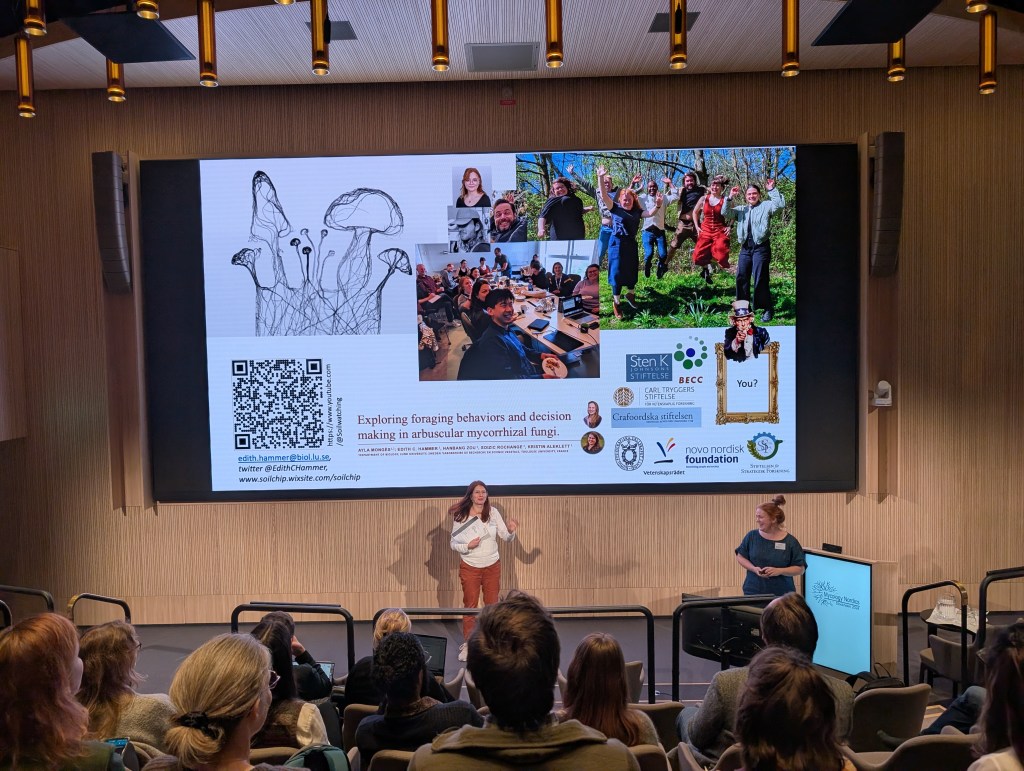
Håvard Kauserud from University of Oslo, Norway, kicked off the meeting with his thought-provoking keynote talk for the first session. Inspired by Donald Rumsfeld’s statement “There are unknown unknowns” he highlighted that besides fungi whose ecology is understood, but for which only sequence-level data is available, there are numerous known taxa with limited ecological information. For the second session, the keynote was given by Lorena Ament from Stockholm University, Sweden. The title of her talk was “Population and Comparative Genomics: Fungal immune receptors”, where she introduced to the audience the topic of NOD-like receptors (NLRs), a diverse class of proteins involved in self-nonself recognition. Using long-read sequencing, she used the characterization of NLRs within the Podospora anserina species complex as examples of fast-evolving elements of the fungal pangenome.
At the start of day two of the meeting, Henrik de Fine Licht from University of Copenhagen, Denmark, gave his keynote talk for the third session. The title of his talk was “Entomopathogenic fungi as models for fungal interactions”. He started with a general overview of the varied ways fungi interact with other organisms both in beneficial and pathogenic interactions. Then, he showed examples from his research group on experimental tests of whether pathogenic fungal host-range correlate with breadth of nutritional capabilities, combining ecological theory of nutritional geometry with fungal growth on defined media. At the last session of the conference, Marisol Sanchez Garcia from the Swedish University of Agricultural Sciences, Sweden, gave a keynote presentation with the title “Unveiling fungal diversity: new taxonomic discoveries”. In her talk, Marisol pushed forward how knowledge about species diversity is necessary to address questions related to evolution in fungi. She gave examples from her own work to disentangle the taxonomy of three fungi of the Agaricales.
To enhance discussions and networking, after the first two sessions on the opening day of the conference, we organized a poster session. All participants of the conference, who did not give an oral presentation, presented their work on posters. It was a fruitful poster session divided into three time slots, which gave the participants the opportunity to present their own work as well as learning about the work of other participants.
The venue for session talks was the Beijer Hall of the Royal Swedish Academy of Sciences, while the poster session and dinner were organized at the Department of Ecology, Environment and Plant Sciences, Stockholm University. The meeting was generously supported by several sources. First, The Royal Swedish Academy of Sciences gave support for lunches and coffee, access to the Beijer Hall (including technical support) and travel and accommodation for the keynote speakers. The Carl Trygger Foundation and The Royal Society of Arts and Sciences of Uppsala gave support for the poster session and dinner. For the latter, Stockholm University also gave support by generously allowing the use of the localities without cost.
At the end of the meeting, we announced that the next Mycology Nordics conference will take place in Oslo, Norway, in 2026. We anticipate that this meeting was the first in a series of meetings providing a forum for Nordic mycologists to meet and share their advances in understanding the genetics, ecology, and evolution of fungi.
 Mycology Nordics